
Today’s post comes from Penn Press’s Marketing Operations Manager, Tracy Kellmer, continuing a blog series in which Tracy explores one of the books currently for 75% off in the Franklin’s Faves section of our website! The Franklin’s Faves selection will rotate in early January, so be sure to pick up your copy of today’s featured book, Artificial Life After Frankenstein by Eileen M. Hunt (or any of the other great books currently available), ASAP—and use code FRANKLINSFAVES to receive your 75% discount!
One of the perks of working at a university press, and especially Penn Press, is that I am exposed to excellent scholarly treatments of a wide variety of subjects. As a member of the Marketing department, I get to know a bit about every book we publish through my engagement with its metadata, such as keywords and subject codes, and its descriptive copy, which appears in everything from seasonal catalogs to online retail sites (we know the one you’re thinking of). But a marketer has short-lived romances with books on the front list: every six months I have a new season’s worth of books to get to know and a new seasonal catalog to publish. That’s why I love Franklin’s Faves! I get a chance to rediscover a book that intrigued me the first time around. I hope you enjoy my rediscoveries as much as I do!
What I picked:
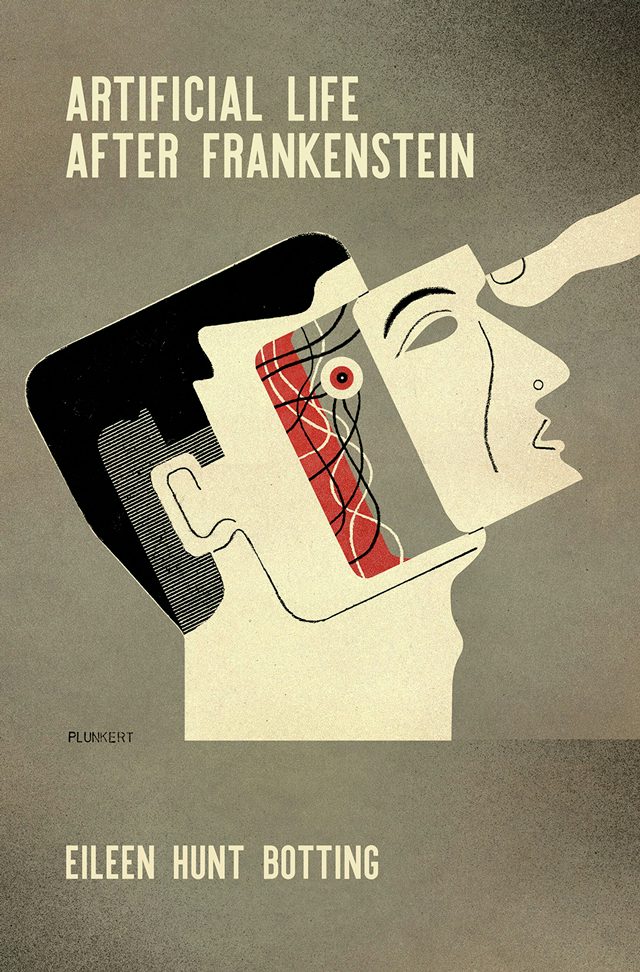
Artificial Life After Frankenstein by Eileen M. Hunt
Why I picked it:
Artificial Intelligence is such a hot topic right now, whether we’re talking about Anthropic’s Claude, ChatGPT, Alexa/Siri, or any number of other configurations of computer codes and networks that appear to us as thinking machines, such as Large Language Models and Augmented Retrieval Generation. Depending on what books your read or movies you watch, or where you get your news, or which social media platform you use, the messages surrounding AI can range from the sensationally optimistic—AI will cure cancer! AI will make everyone rich!—to the rabidly apocalyptic—AI will destroy us all! Both ends of this spectrum share the same viewpoint underlying their prognostications: the point of view of us, the humans, wondering what AI will do to us or for us and how we can control it and determine its ultimate forms and uses. But I wanted to read Artificial Life After Frankenstein because it reverses this perspective. It instead asks how do we humans treat the creatures that emerge from the scientists and their labs and why does it matter?
What I discovered:
To begin, I want to say that Eileen Hunt is an amazing companion with whom to read or re-read the works of Mary Shelley. She explicates not only Mary Shelley’s writings but also those of other science fiction writers who wrote after her, from Philip K. Dick to Octavia Butler. She is also a political theorist, and she combines her literary study with the analytical tools and selected works from that field, from Spinoza to Habermas to Fukuyama. And she summarizes the histories of the development of and debates surrounding new technologies in a way that is so informative, clear, and sometimes surprising that I came away with a better understanding of both the facts and the fictions.
Although this book published in hardcover in 2018 (almost ten years ago already!), I found it to be incredibly relevant and helpful for thinking about our current moment, especially with Anthropic’s highly anticipated IPO having launched this week. Hunt is an enlightening and engaging writer with whom to revisit these works that are so well-known we may think they have nothing new to teach us. In this post, I will share a few interesting tidbits and impressions that I came away with and that I found irresistible for my own further thought experiments.
First, the book’s depiction of the genetic engineering boom of the 1990s reminded me of the present boom of artificial intelligence: technological advances that seem both to outpace the ethics required to address them and to threaten the fabric of society itself, if we are to believe the news reports and pop culture surrounding them. Now, In Vitro Fertilization (IVF) and other fertility treatments are practically routine, stem-cell research is highly monitored and limited to a select few researchers and uses, and CRISPR kits make it possible for people to do their own genetic experiments at home. But at first, scientists intimately involved in genetic research recognized that voluntary decision-making would not be enough to rein in what the technology made possible, such as the prospects of designer babies and clones. And much like Victor Frankenstein or the nameless creators of the plague in The Last Man, there were scientists who operated outside the boundaries of the prevailing norms, guided only by their own conscience or ambitions and the limits of the technology. Thankfully, enough ethically minded scientific and policy professionals petitioned national and international governing bodies to regulate genetic research and to create ethical guidelines for any commercial use of it. One of the responses to that petition was the Universal Declaration on the Human Genome and Human Rights, which could guide the establishment, implementation, and enforcement of policies at national and other political levels. We hear the same request for regulation from AI companies today, and my hope is that this pattern of response will repeat itself.
The second amazing thing I learned is that Alan Turing, before creating the famous Turing Test in 1950, said in 1948 that “the idea of intelligence is itself emotional rather than mathematical” (quoted on page 66). Turing is also quoted as saying: “Instead of trying to produce a programme to simulate the adult mind, why not rather try to produce one which simulates the child’s? If this were then subjected to an appropriate course of education one would obtain the adult brain.” Turing referred to these programs as “child machines” and Hunt saw a resonance with Shelley, in that both compared the “artificial making of intelligence” with the rearing of children. The “appropriate course of education” for children includes not only the intellectual but also the emotional, psychological, and moral dimensions. I can’t imagine in our current capitalistic and accelerated market environment that any of the AI companies would take the time to nurture their AI products like children, but if they did, what would that AI look like? Would there need to be so much discussion about rogue agents, guardrails, safety measures, and humanity’s destruction? What if AI was nurtured by programmers to truly help humans solve their big problems, such as cancer and hunger, instead of by programmers who are incentivized to build AIs that would replace human workers and increase the profits of shareholders? In other words, what if programmers loved their AIs and their AIs loved them back?
The third thing I noticed validated my own theories about visions of the apocalypse, especially in movies and video games. I’m pretty sure that we’ve all seen at least one Frankenstein movie and one post-apocalyptic movie. And I’m pretty sure that we’re all used to the same ending: the creature is destroyed in the first and a chosen man (gender is important) saves the day in the second. Our screens are limited to futures in which artificial or man-made life must be destroyed, violently, before it destroys us and in which a male genius is the solution (if not also the cause) of the apocalypse. But in Hunt’s reading of Shelley and others, this rehashed, regurgitated, and rote script can be flipped on its head.
The most pessimistic outcomes, the most policed boundaries separating nature from artificial, the most fearful expression of the loss of love, family ties, and humanity in general, were written overwhelmingly by men. I imagine the same is true of the movies and video games I mention above: men penning fantasies that feature themselves both as the geniuses who unleash the apocalypse and as the saviors that restore humanity in their own images. But I was amazed by how the same scenarios could be read so much more optimistically and imaginatively by others, from the coiner of the term robot Karel Čapek to the popularizer of cyborg theory Donna Haraway to the transgender theorist Susan Stryker to Mary Shelley herself. These and other writers were read by Hunt as advancing Shelly’s radical philosophy of love: that is, the necessity of loving all that is regardless of how it may have come into being. Indeed, it is not the technology that ends humanity, it is our failure to love the creatures born of it. A capacious love that overrides a lack of egoistic investment or a fearful or disgusted response to the other is what is ethically required, and what those who insist on binary distinctions such as us/them, man/woman, or natural/unnatural are unable to provide. The real villain is an inability or refusal to love that which is different; that is how humanity loses itself and becomes something other than human. Although Shelley may have made that point first, others have taken up that mantle since and evolved this message in expansive and powerful ways.
Favorite bit:
One of the clearest and most potent ethical stances that emerges from Hunt’s book-length analysis is “no one should be made to serve another” (emphasis hers). “Made” in this context connotes not solely coercion but also, and crucially, creation. And Hunt shows how in Shelley’s novel, this directive can emerge from very unlikely circumstances. Victor Frankenstein literally tears apart his second female monster because he was afraid that should he give her life, she and his original monster could reproduce, and he would be the author of the downfall of humanity (again, male hubris is on full display here). However, this horrific scene could also be read as the most ethical action Victor undertook in the entire novel. If he had indeed followed through with this second creation, then he would have made a creature that was purposefully brought into being to serve the nameless monster’s need for companionship. But the ethical stance demands instead that for any creature brought to life, through any means, its only purpose should be to be in, of, and for itself and its primary right is to be nurtured and introduced into its community according to its norms, gradually accumulating its duty to return that care to other members. Looking at this scene from this perspective, Shelley not only indicts the hubris of Victor, but also the replication of that hubris in the male monster. The final verdict is that all life is deserving of time and care to flourish and due protections from exploitation and discrimination—whether we’re talking about genetically modified (or not) humans; artificial intelligence, androids, or cyborgs; or _____________________ (fill in the blank).