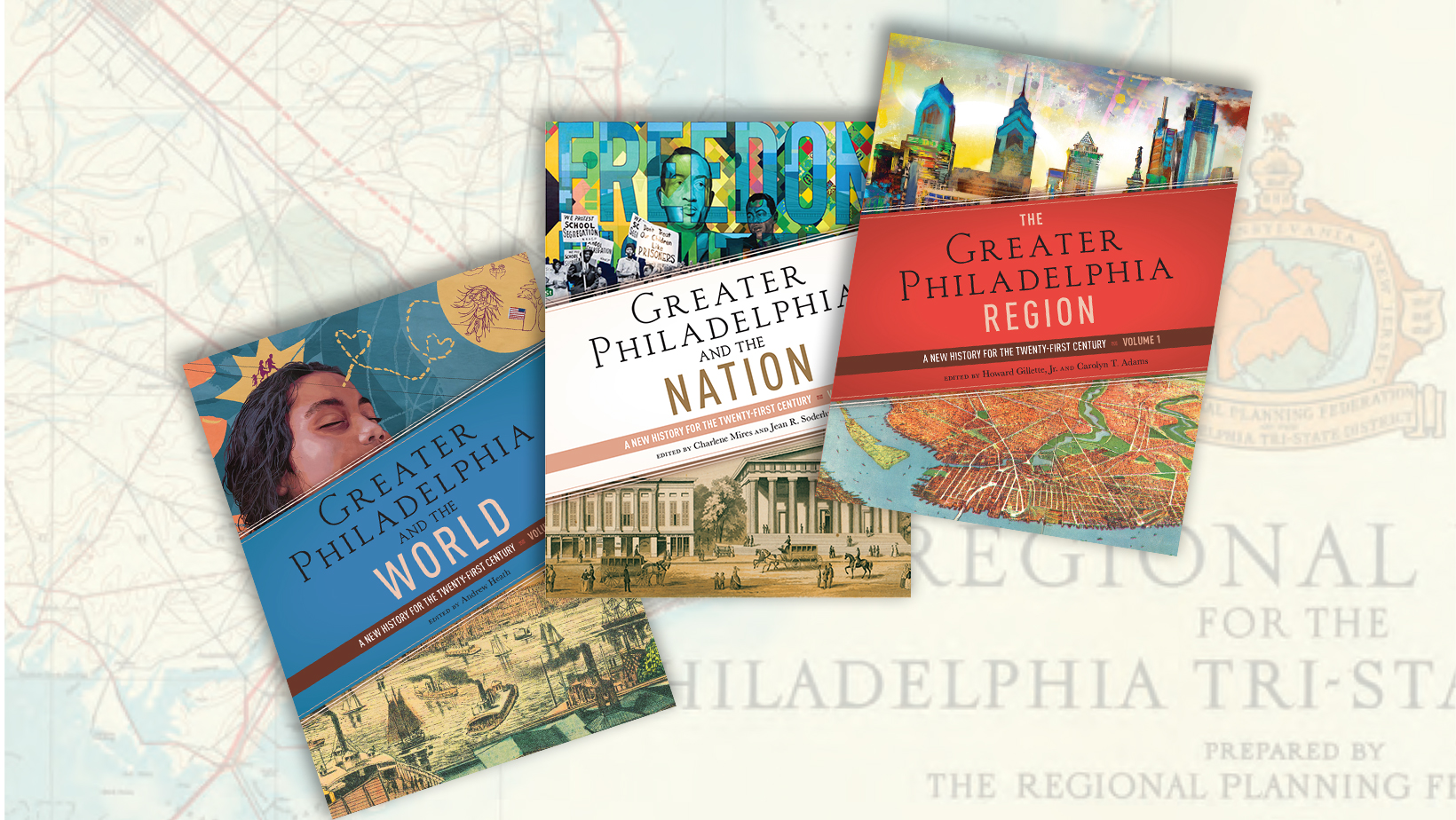
Today’s post comes from Edward Epstein, who is the Alan J. Lee Director of the Teachers Institute of Philadelphia (TIP) at the University of Pennsylvania. Here, he shares an exciting report from a recent series of workshops offered by TIP to Philadelphia public school teachers and drawing on the contents of the newly-published three-volume Greater Philadelphia: A New History for the Twenty-First Century.

This fall, 43 Philadelphia public school teachers completed content-focused workshops, offered free of charge by Penn’s Teachers Institute of Philadelphia (TIP), with sponsorship from Penn Press. They will use the new knowledge they gained during the upcoming Semiquincentennial year, helping students to become better informed about their city and their nation.
Participating teachers (called fellows) wrote curriculum modules based on the knowledge that was shared in the workshops. TIP will make these modules available to teachers everywhere at www.theteachersinstitute.org.
Four of the five workshops offered were developed jointly with Penn Press and the Penn Graduate School of Education (Penn GSE) for the Semiquincentennial. These were led by editors of and contributors to Penn Press’s recently published books curated from the Encyclopedia of Greater Philadelphia—Greater Philadelphia: A New History for the Twenty-First Century, available as three individual volumes or as a set—and covered Philadelphia’s history, culture, and ecology. Fellows will use the curriculum modules they wrote on these topics this spring in classrooms throughout the School District of Philadelphia (SDP). Penn Press’s thoughtfully edited and beautifully designed three-volume set presents a trove of information about the region from noted scholars.
Thanks to a grant from the Philadelphia Funder Collaborative for the Semiquincentennial, Penn Press was able to support a stipend for each fellow, in addition to a copy of the Encyclopedia for use in the classroom. The Press is also providing copies to school libraries throughout the SDP. Penn GSE provided writing support to the teachers, helping them to complete their curriculum modules.
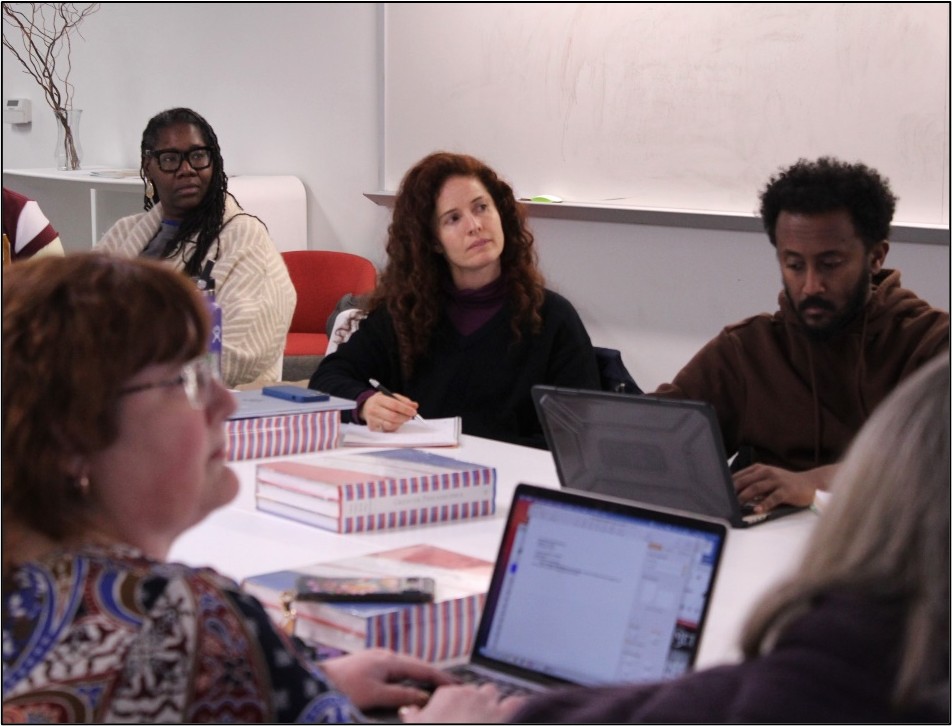
The workshops are:
- The Schuylkill River, led by Howard Gillette, Rutgers University
- Capital of Black America, led by Charlene Mires, Rutgers University & Andrew Diemer, Temple University
- Industry and Pollution: An Environmental History of Greater Philadelphia, led by Stephen Nepa, Pennsylvania State University-Abington
- Recent Immigration and Migrant Communities in Philadelphia, led by Domenic Vitiello, University of Pennsylvania
District Superintendent Tony Watlington has noted that “teachers are the single most important factor in student academic growth and attainment.” TIP values teachers’ intellectual abilities and enables them to engage in deep exploration of a topic of their choosing, under the guidance of a professor or expert in the field. A fellow in the “Recent Immigration” workshop noted that his workshop leader “had a wealth of knowledge about the subject,” and that “he helped participants reflect on their personal connections to the subject of the workshops.”
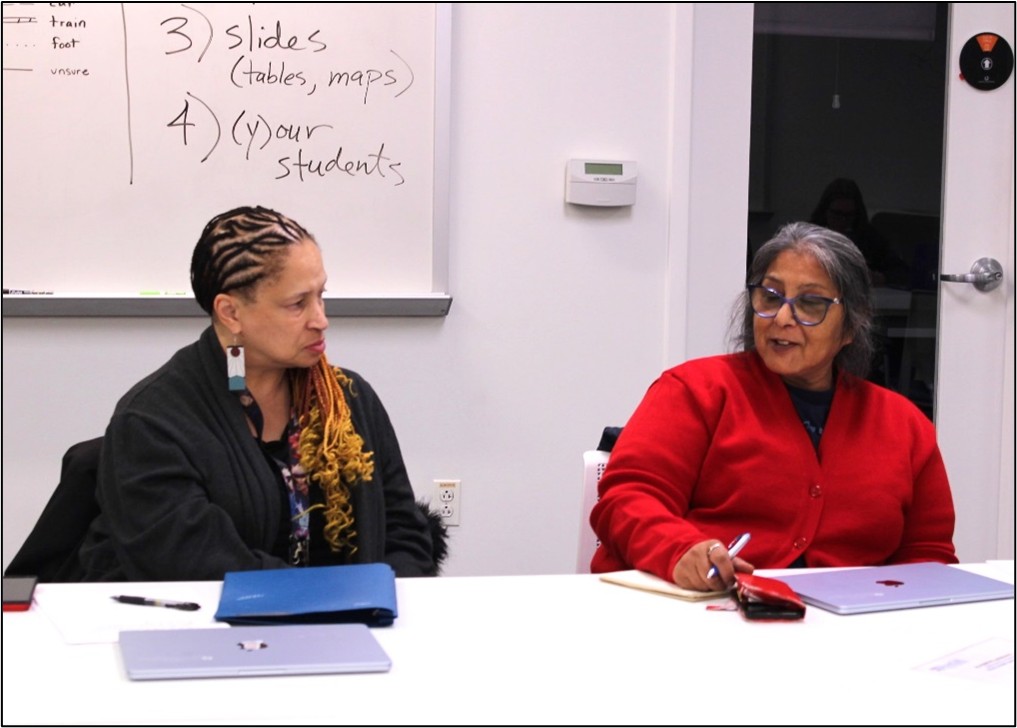

The curricula teachers write in TIP programs are tailored to their students’ grade level and designed to cover district and state academic requirements. A fellow in the “Capital of Black America” workshop said that what she learned “will fit neatly into the sequence on local history, human geography, and economics, and meets a need for more local history in the social studies curricula.”
Now in its twentieth year, TIP is a Penn-based program that uses a model of content-focused teacher professional development pioneered by the Yale-New Haven Teachers Institute in 1978. It is affiliated with the Yale National Initiative, a national network of Teachers Institutes. Evaluation studies have shown that the Institute approach improves teacher confidence, boosts teachers’ expectations of students, and promotes teacher retention in the public schools.